The Air-cooled Energy Cube utilizes an independent air cooling system, achieving high energy density. It offers high efficiency, low noise, safety, reliability, and easy scalability. When integrated with PCS (Power Conversion Systems), it can regulate grid voltage, correct three-phase imbalance, and manage harmonics, enhancing power quality.
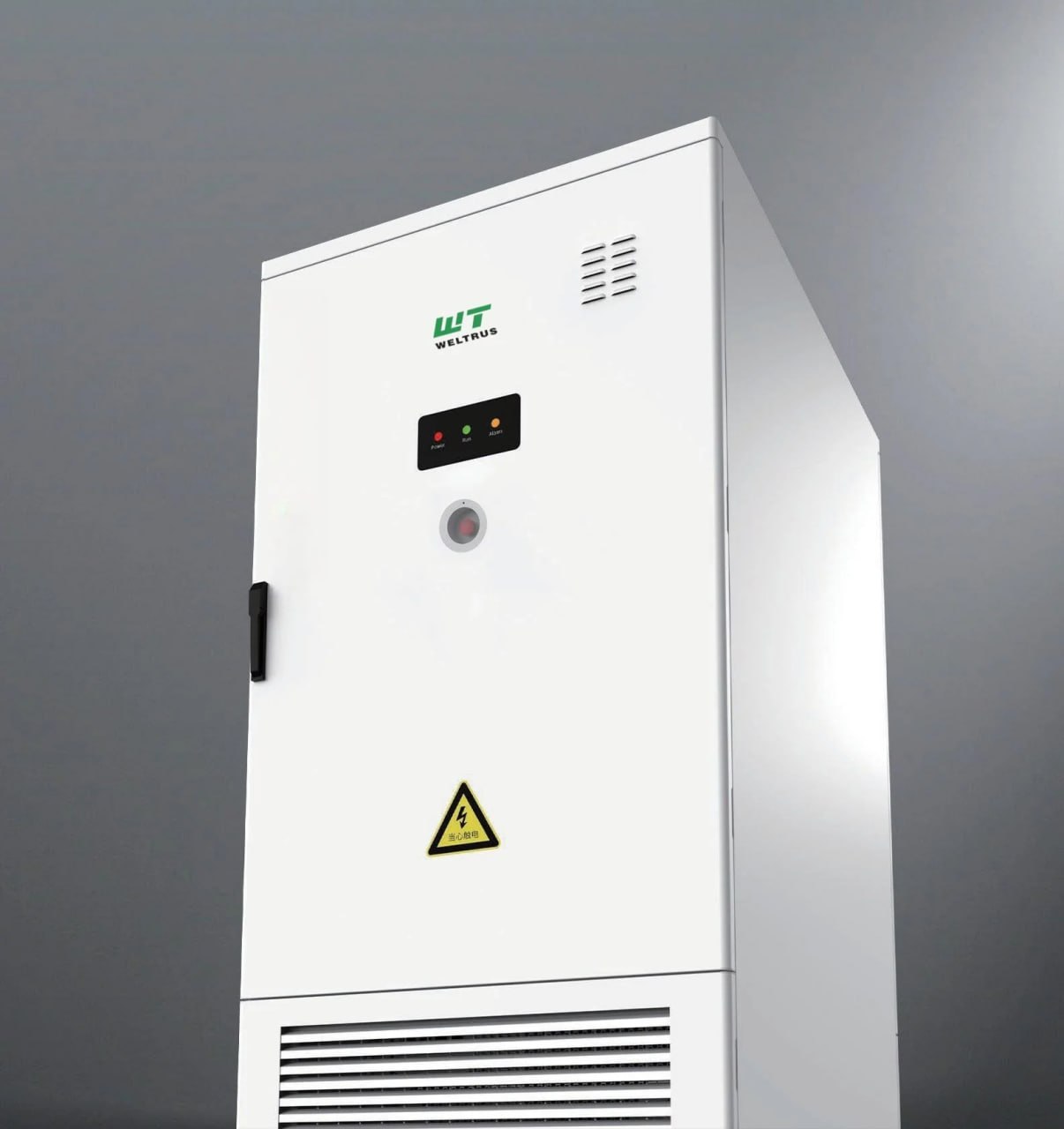
The Air-cooled Energy Cube utilizes an independent air cooling system, achieving high energy density. It offers high efficiency, low noise, safety, reliability, and easy scalability.
When integrated with PCS (Power Conversion Systems), it can regulate grid voltage, correct three-phase imbalance, and manage harmonics, enhancing power quality.
With a footprint of only 1.3㎡, its modular design and high protection level make it adaptable to various applications, serving as a backup power source to help businesses reduce energy costs and increase the use of green energy.
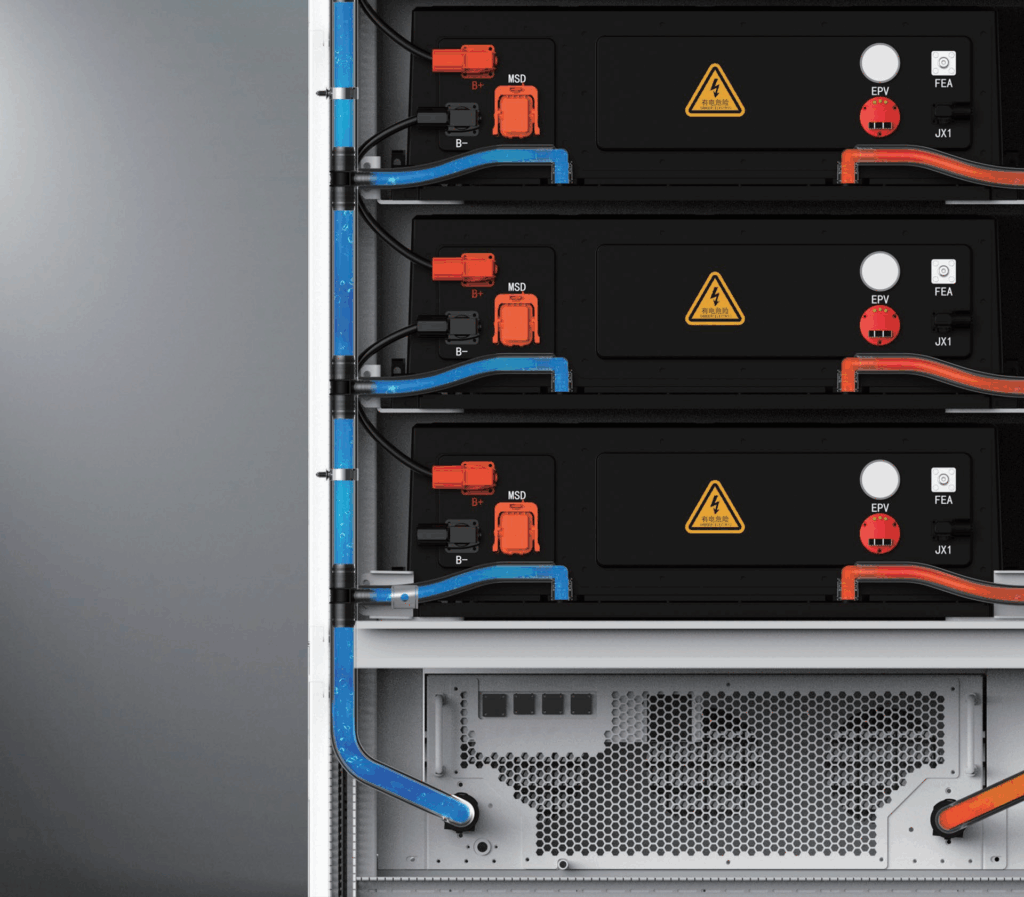
Features liquid cooling design with low noise operation at ≤75dB.
Partitioned system isolation with active safety monitoring and PACK-level immersion fire protection technology.
Advanced cloud-edge computing architecture for intelligent energy management and real-time optimization.
Modular structure for easy installation and commissioning, allowing flexible expansion as needed.
The system dynamically monitors and assesses the local device data, allocates power outputs for various energy storage devices, coordinates power among multiple devices, optimizes operational modes — ensuring the highest system utilization efficiency and maximum returns.
24/7 Cloud-Based Real-Time Monitoring, Analyzing Battery Pack Consistency and Safety. Advanced Algorithms Predict Potential Risks with Real-Time Warnings, Ensuring Battery and Equipment Safety. Rapid Dispatch and Repair in Case of System Failures.
Real-time monitoring of device operation status, peak and off-peak power consumption, load power, and energy storage revenue through the system. Achieve remote control of devices and online system updates, optimize device operation strategies — offering peak shaving, demand control, emergency control, load tracking, and various other strategies to enhance overall economic benefits.
During periods of low electricity prices, use the grid to charge the devices. During periods of high electricity prices, discharge the batteries to power the load.
Seamlessly switch to battery backup during grid outages, ensuring critical loads remain powered and business continuity is maintained.
Compensate for power fluctuations and provide reactive power support to stabilize the electrical system and improve power quality.
Integrate solar PV generation with energy storage to create a self-sufficient microgrid, reducing dependence on the utility grid and maximizing renewable energy utilization.
| Battery Type | LFP | Operating Voltage Range | 672V — 864V |
| Configuration | 1P260S | Cooling Method | Forced Air Cooling |
| Rated Capacity | 314Ah | Coolant | Ethylene glycol solution (50% v) |
| Rated Energy | 261kWh | Cycle Life | 6,000 cycles |
| Rated Voltage | 768V | Fire Protection System | Aerosol |
| Rated Power | 125kW | Detector Type | Temperature / Smoke Sensor / Water Leak |
| Rated Charge/Discharge C-rate | 0.5P |
| Rated AC Power | 125kW — 137.5kW | ||
| Wiring Method | Three-phase, four-wire | ||
| Allowed Grid Voltage | 230V/400V (−15% ~ +15%) | ||
| Allowed Grid Frequency | 50Hz/60Hz ± 2.5Hz | ||
| Power Factor | 0.99 | ||
| Operating Environment | −20°C to 50°C (de-rated operation above 45°C) | ||
| Noise Level | ≤75dB | ||
| Dimensions (W×D×H mm) | 1200 × 1553 × 2310 | ||
| Weight | About 2.4t | ||
| Water Resistance Rating | Battery compartment: IP65, Electrical compartment: IP54 | ||
| Allowed Relative Humidity | 0–95% (non-condensing) | ||
| Maximum Altitude | ≤2000m (degraded above 2000m) | ||
| Communication Interface | CAN, Ethernet | ||
| Communication Protocol | Modbus TCP/RTU | ||
| System Operation Mode | Peak shaving, demand control, reactive power adjustment, grid scheduling interface, Remote dispatch, local data storage, anti-backflow feature | ||
500 kW / 2 MWh
100 kW / 100 kWh
300 kW / 600 kWh